


Microsoft Dynamics ERP: A Complete Guide for IT Managers

Microsoft Dynamics 365 ERP stands as a modern, integrated platform combining enterprise resource planning (ERP) and customer relationship management (CRM) with a suite of business applications. This ecosystem enables businesses to streamline operations, enhance productivity, and make data-driven decisions through a modular structure that aligns with specific organizational needs. Its core strength comes from merging various applications into one flexible platform, letting companies pay only for the functionalities they require. 

Modules and Functionalities 

Dynamics 365 ERP covers a broad scope of business processes with distinct modules, including finance management, supply chain management, project operations, human resources, and customer relationship management. These modules offer tools such as general ledger management, accounts payable and receivable, resource scheduling, payroll management, and advanced analytics powered by AI. The system also automates workflows, helps standardize business processes, and supports sales and lead management through features like sales sequences and lead scoring.  

Driving Digital Transformation 

Microsoft Dynamics supports digital transformation by embedding AI-enabled intelligent workflows, predictive analytics, and automation capabilities that optimize resources and improve decision-making. For instance, sales and marketing teams benefit from automated lead qualification and tailored customer engagement, while operations leverage real-time insights to enhance efficiency and agility. The platform’s integration with Power Platform tools like Power BI and Power Automate adds further depth to analytics and process automation, helping companies become more innovative and competitive. 

Integration with Microsoft 365 and Azure 

One of Dynamics 365’s key advantages is seamless integration with Microsoft 365 apps (Excel, Word, Outlook, Teams) and Azure cloud services. This enables users to operate within familiar environments while leveraging cloud scalability, data storage, and advanced security features. Collaboration is enhanced through shared workspaces and unified data models, facilitating faster communication and coordinated workflows across departments. Additionally, Azure’s AI and machine learning capabilities further empower Dynamics users with intelligent automation and insights.  

Security and Compliance 

Microsoft Dynamics ERP upholds robust security standards, leveraging Azure’s multi-layered security protocols, data encryption, and compliance certifications such as GDPR, ISO 27001, and HIPAA. Role-based access controls and centralized identity management help protect sensitive business data while maintaining audit trails and regulatory compliance. This security posture reassures enterprises that their data is safe whether hosted on-premises, in the cloud, or in hybrid setups. 

Deployment Options: On-premises, Cloud, and Hybrid 

Dynamics 365 ERP offers flexible deployment options tailored to organizational preferences and requirements. Companies can choose on-premises installations for full control, cloud-based solutions for scalability and lower upfront costs, or hybrid models blending both. This flexibility supports varying IT strategies and ensures that businesses can adopt Dynamics ERP in ways best suited to their infrastructure, budget, and compliance needs.  

Resources and Training for IT teams 

To maximize the benefits of Dynamics ERP, IT teams can access extensive resources including Microsoft Learn training modules, certification programs, community forums, and official documentation. These enable teams to deepen their expertise in deployment, customization, security, and advanced functionalities, facilitating smoother implementation and ongoing management. Additionally, Microsoft partners often provide tailored training and support to align the ERP system with business goals. 

In summary, Microsoft Dynamics 365 ERP offers IT managers a scalable, secure, and integrated platform that supports comprehensive business operations and digital transformation with flexible modules and deployment options. Combined with seamless integration with Microsoft 365 and Azure, strong security, and rich training opportunities, it empowers enterprises to innovate and compete effectively in today’s fast-changing technological landscape. 

Let’s Solve Your ERP Challenges Together!

We’d love to hear from you! Tell us what ERP or business challenges you’re currently facing — and we’ll get back to you with tailored insights, solutions, or resources.

14 views

IFS ERP Field Service: Streamlining Operations & Boosting Efficiency

Field service teams in the services industry often grapple with complex scheduling, resource allocation, real-time communication, and maintaining high customer satisfaction. Disjointed systems and manual processes lead to inefficiencies like unnecessary travel, delayed service, and increased operational costs. For asset-heavy industries, managing maintenance contracts and ensuring equipment uptime adds further complexity. These challenges can result in missed SLAs, frustrated customers, and reduced profitability. 

IFS ERP’s Field Service Management Capabilities 

IFS ERP offers robust field service management (FSM) capabilities designed to address these challenges comprehensively. Key features include automated scheduling and dispatch, intelligent route optimization, real-time technician tracking, and mobile-first execution for seamless field mobility. The integration with core ERP modules like finance, supply chain, and asset management ensures that scheduling, inventory, and workforce management operate cohesively. IFS FSM also supports service contract management and SLA tracking, enabling proactive service delivery rather than reactive fixes. 

Enhancing Efficiency and Customer Satisfaction 

By automating routine tasks and providing real-time visibility, IFS ERP significantly enhances field service efficiency. The AI-driven scheduling reduces technician downtime and travel, boosting first-time fix rates and reducing costs. Mobile apps enable technicians to access and update work orders offline, ensuring uninterrupted service even in remote locations. Consequently, customers experience faster response times and more reliable service, which drives satisfaction and loyalty. Organizations using IFS FSM report up to 20% higher equipment uptime, 33% greater technician productivity, and 35% less drive time.  

Real-World Success Stories 

global environmental services provider operating across multiple countries leveraged IFS.ai integrated with their IFS Cloud ERP to overcome fragmentation and scale operations efficiently. By using AI for route planning and IoT for remote trap monitoring, the company reduced unnecessary technician visits and aligned with regulatory sustainability goals, improving both operational efficiency and customer trust. Other companies employing IFS FSM highlight its role in reducing truck rolls, optimizing parts inventory, and transforming field service from a cost center into a growth enabler. 

Tips for Effective IFS ERP Integration 

To maximize benefits, companies should: 

  • Ensure seamless integration between IFS FSM and ERP modules for consistent data flow. 
  • Leverage mobile applications to empower field technicians with real-time data access. 
  • Use AI-driven scheduling tools to optimize resource allocation and reduce travel time. 
  • Regularly analyze field data to refine service strategies and improve SLAs. 
  • Engage stakeholders early to tailor the system to specific operational needs without heavy customizations. 

By strategically integrating IFS ERP into field service workflows, service organizations can transform their operations to be more efficient, responsive, and customer-centric. This blend of advanced technology and industry-focused design makes IFS ERP a powerful partner for companies looking to excel in field service management. 

Let’s Solve Your ERP Challenges Together!

We’d love to hear from you! Tell us what ERP or business challenges you’re currently facing — and we’ll get back to you with tailored insights, solutions, or resources.

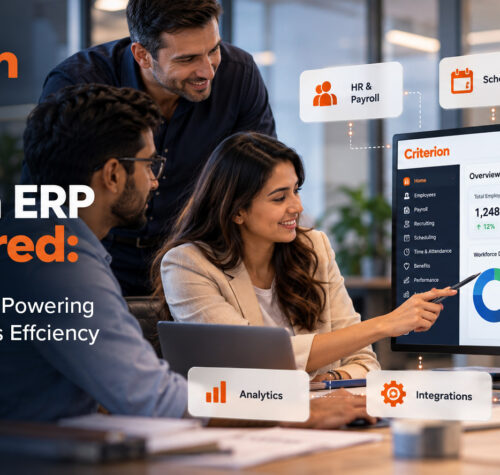
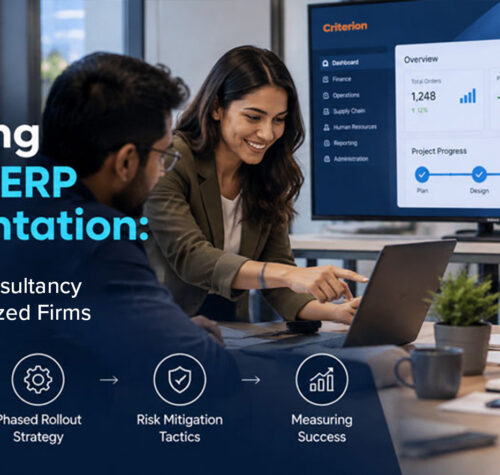
Criterion ERP Implementation Challenges & Best Practices Guide

Implementing an ERP system can be complex, often presenting challenges like scope creep, resistance to change, and integration issues. Criterion ERP stands out by combining advanced integration capabilities with user-friendly interfaces and customizable dashboards. This approach helps bridge gaps between legacy systems and modern ERP needs, ensuring a seamless transition tailored to each company’s unique processes. 

Identifying and Addressing Top Challenges in ERP Projects 

Common hurdles in ERP implementation include unclear project scope, change management struggles, data migration errors, and budget overruns. For instance, many companies face resistance from users unfamiliar with new systems, while poorly defined objectives cause delays and inefficiencies. Research shows that over half of ERP implementations fail on the first attempt due to such issues, with many projects running 30% longer and costing up to four times more than planned. 

How Criterion ERP’s Tools Mitigate Implementation Risks 

Criterion ERP addresses these risks through robust data validation tools, streamlined integration features, and flexible configuration options that avoid excessive customization. Its dashboards and search capabilities enable quick access to critical data, reducing operational slowdowns. The system’s advanced APIs facilitate smooth bridging with legacy components, minimizing disruptions during rollout.  

Ensuring Stakeholder Buy-In and User Adoption 

Securing early and continuous stakeholder involvement is critical for successful ERP adoption. Engaging users and management throughout the process aligns expectations and reduces resistance. Studies show that early stakeholder engagement can increase project success rates by up to 50%. Criterion supports this by providing clear communication channels and training resources, helping users understand benefits and adapt confidently.  

Effective Project Management Methodologies with Criterion ERP 

Successful implementation relies heavily on structured project management practices, including risk identification, timeline management, and ongoing monitoring. Criterion advocates for detailed planning and realistic budgeting, with frequent checkpoints to prevent scope creep. This disciplined approach ensures timely delivery while maintaining alignment with business goals. 

Post-Implementation Support and Continuous Improvement 

ERP success extends beyond launch. Criterion emphasizes comprehensive post-implementation support—offering training, meticulous documentation, and maintenance programs. This proactive model reduces downtime, supports continuous system refinement, and maximizes return on investment by adapting to evolving business needs. 

Lessons from Successful Criterion ERP Implementations 

Take Britton Electric as an example. Facing complex payroll integration and legacy system challenges, they chose Criterion for its ease of use and integration strength. Within six months, Britton experienced faster processing times and reliable support, attributing their smoother ERP transition and operational improvements to Criterion’s tailored solutions and ongoing partnership. 

By following these best practices with Criterion ERP, companies can overcome common implementation pitfalls, ensuring a smoother, more efficient journey from deployment to ongoing success. 

Let’s Solve Your ERP Challenges Together!

We’d love to hear from you! Tell us what ERP or business challenges you’re currently facing — and we’ll get back to you with tailored insights, solutions, or resources.

61 views

Acumatica ERP for SMEs: Boost Efficiency & Business Growth

Acumatica ERP is a leading cloud-based Enterprise Resource Planning system tailored for small and medium enterprises (SMEs). It holds a strong market position, achieving No. 1 rankings in multiple categories in the 2024 G2 Reports and being recognized as a leader by Nucleus Research and IDC MarketScape for its usability and mid-market focus. Its cloud-native design and user-friendly interface make it an accessible and scalable option for growing companies seeking to unify their operations. 

Key Features Driving Efficiency for SMEs 

Acumatica offers a comprehensive suite of integrated business applications that cover financial management, accounting, customer relationship management (CRM), supply chain, inventory, warehouse, sales, and project management. It centralizes operations on a single platform, improving collaboration and reducing inefficiencies. Automation of routine processes and real-time data access help SMEs save time and optimize resources. The system’s user-friendly design ensures quick adoption even without large IT teams. 

Real-World Case Studies Showcasing Operational Improvements 

One example is CASE, a multinational with global offices, which used Acumatica to streamline multi-currency financials and unify reporting, leading to enhanced efficiency and support capabilities. Other SMEs report achieving up to 30% faster procurement cycles through automated inventory and purchase order management, showcasing tangible productivity gains after Acumatica implementation. 

Integration Capabilities with Other Business Tools 

Acumatica ERP is built with open architecture allowing seamless integration with numerous third-party applications. It connects effortlessly with ecommerce platforms like Shopify and Magento, CRM systems including Salesforce and Hubspot, and various payment gateways. This real-time, bi-directional synchronization ensures accurate data flow across platforms, eliminating silos and enhancing overall operational visibility.  

Best Practices for Successful Acumatica ERP Implementation 

Implementing Acumatica successfully begins with thorough preparation and planning. Identifying unique business requirements, forming dedicated project teams with representatives from key departments, and creating clear project plans with defined timelines are essential steps. Detailed system design aligns Acumatica with existing processes and foresees potential integration challenges. Using project management tools helps keep the implementation on track and ensures stakeholder communication. 

Measuring ROI and Performance Post-Deployment 

ROI from Acumatica ERP comes from reduced labor costs, error reduction, better inventory management, and increased productivity. Additionally, improved customer satisfaction and retention driven by enhanced CRM capabilities contribute to long-term gains. Calculating ROI involves assessing cost savings, revenue growth, productivity gains, and customer retention benefits, guiding businesses to quantify the financial impact of their ERP investment. 

Future Trends in Acumatica ERP and Preparing Businesses 

Looking ahead, Acumatica is advancing with AI-powered automation and anomaly detection to proactively identify and resolve operational issues. The ERP’s modernized user interface focuses on enhanced productivity and personalization. Industry-specific capabilities continue to expand, tailored for manufacturing, retail, and professional services. Businesses preparing for these trends should prioritize adopting AI features, updating user training, and exploring customized modules aligned with their sector. 

Let’s Solve Your ERP Challenges Together!

We’d love to hear from you! Tell us what ERP or business challenges you’re currently facing — and we’ll get back to you with tailored insights, solutions, or resources.

Construction ERP AMS: Future-Ready Operations Guide

The construction industry is evolving rapidly, and so are the demands placed on ERP systems. Application Management Services (AMS) play a crucial role in ensuring that construction ERP solutions remain scalable, compliant, and innovative—preparing firms for future challenges. 

Evolving Demands and ERP Scalability 

Construction projects grow in complexity and scale, requiring ERP software that can flexibly expand with business needs. Whether a company opts for cloud, on-premise, or hybrid ERP models, AMS ensures the seamless management and scalability of these systems. By continuously monitoring performance and optimizing configurations, AMS allows construction firms to grow without disruption. 

Continuous Improvement and Innovation 

AMS fosters continuous process improvement by addressing emerging requirements and incorporating innovations. This ongoing service guarantees that ERP software adapts to changes in construction workflows, compliance regulations, and market conditions. For example, continuous integration of AI-enhanced project monitoring tools improves decision-making and resource allocation. 

Managing Compliance, Updates, and Integrations 

Construction firms face stringent regulations covering safety, environmental standards, labor laws, and permits. AMS plays an essential role in maintaining compliance through timely software updates and automated tracking of certifications and safety protocols. Proactive AMS also manages integrations with other tools like Building Information Modeling (BIM) and document management systems, ensuring data harmony across platforms.  

Risk Mitigation and Cost Control 

Continuous AMS support minimizes risks by detecting system vulnerabilities early, preventing project delays and cost overruns. Real-time budget tracking and variance alerts empower project managers to take corrective action swiftly. Companies that use AMS-enabled ERPs report significantly better cost control and risk management, leading to improved profitability. 

Growing AMS Consultancy Models 

Construction firms increasingly rely on AMS consultancy models tailored to sector-specific needs. These consultancies offer expert services ranging from ERP implementation and migration to bespoke software customization and ongoing support. This trend highlights the importance of expert AMS partnerships in maximizing ERP ROI and operational efficiency. 

Future Technologies Supported by AMS 

AMS is pivotal in integrating future technologies such as Artificial Intelligence (AI) and the Internet of Things (IoT) with ERP solutions. AI-driven analytics forecast project risks and optimize resource allocation, while IoT sensors enable predictive maintenance and real-time equipment monitoring. Together, these technologies transform ERP into a proactive, intelligent system for construction operations. 

Conclusion: Prepare Today for Tomorrow’s Challenges 

Investing in Application Management Services is essential for construction companies aiming to build future-ready ERP systems. AMS not only extends ERP scalability and innovation but also ensures compliance, controls costs, and integrates cutting-edge technologies. Embracing AMS today equips firms to navigate tomorrow’s complex construction landscape with agility and confidence. 

Let’s Solve Your ERP Challenges Together!

We’d love to hear from you! Tell us what ERP or business challenges you’re currently facing — and we’ll get back to you with tailored insights, solutions, or resources.

72 views

IFS ERP for Construction: Driving Project Success & Efficiency

The construction industry faces unique complexities in managing projects—from stringent timelines and budgeting to coordination across multiple teams and compliance with safety standards. IFS ERP stands out as a powerful solution, offering an integrated platform tailored to tackle these challenges effectively.  

Unique Challenges in Construction Project Management 

Construction projects often grapple with poorly defined goals, inaccurate budget and time estimates, and fragmented communication among stakeholders. These issues can lead to cost overruns, delayed delivery, and safety risks. Additionally, managing diverse resources and subcontractors adds layers of complexity that require robust planning and monitoring tools.  

IFS ERP Capabilities in Construction 

IFS ERP provides a single, configurable platform that integrates project management, budgeting, resource scheduling, compliance, and safety management. 

  • Project management and budgeting: IFS enables precise financial control and forecasting, helping firms avoid cost overruns and maintain adherence to budgets. Real-time dashboards provide comprehensive oversight for better decision-making. 
  • Resource and subcontractor management: The system streamlines workforce allocation and subcontractor coordination using mobile applications and timekeeping tools, improving accountability and productivity on-site. 
  • Compliance and safety management: IFS supports adherence to industry regulations and standards, reducing risks through embedded compliance workflows and real-time safety monitoring. 

Benefits Realized 

Construction firms leveraging IFS ERP report significant improvements in project delivery, often completing on time and within budget. Enhanced collaboration across stakeholders through centralized data and real-time updates breaks down silos, increasing transparency and trust. For instance, a detailed case study illustrates how a contractor reduced project delays by 15% and cut costs by optimizing resource allocation and using IFS for financial planning.  

Consultancy Approach 

Implementing IFS ERP for construction involves tailoring workflows to the specific needs of complex projects. Change management plays a crucial role in fostering user adoption at construction sites, involving training, clear communication, and phased rollouts to ease the transition from legacy systems and manual processes.  

Conclusion 

The future outlook for construction companies adopting ERP systems like IFS is promising. As the industry shifts towards modular construction, offsite fabrication, and digital integration, IFS ERP offers a future-proof platform that delivers end-to-end lifecycle control, improving efficiency, reducing risks, and enhancing profitability. In a fast-evolving market, embracing such solutions will be key to sustaining long-term success.  

Let’s Solve Your ERP Challenges Together!

We’d love to hear from you! Tell us what ERP or business challenges you’re currently facing — and we’ll get back to you with tailored insights, solutions, or resources.
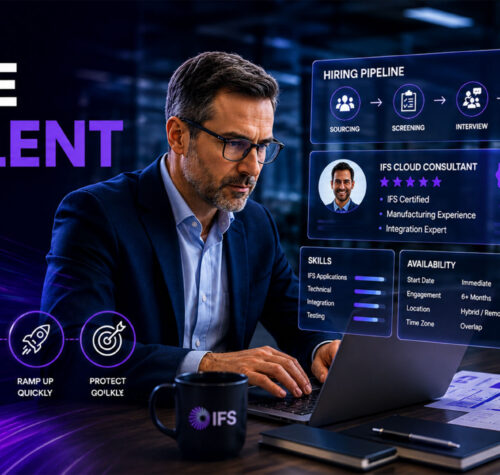
Construction ERP AMS: Ensuring Seamless ERP Implementation

ERP implementation in the construction sector presents unique challenges. Construction projects involve numerous stakeholders, subcontractors, and fluctuating project scopes, making thorough planning and execution vital. Common obstacles include resistance to change among site managers and field workers, complex data migration involving vast project data, insufficient training, lack of executive support, customization overload, and potential integration failures with existing tools. These issues can lead to delays, increased costs, and reduced productivity if not managed effectively. 

Why AMS is Essential During and After ERP Deployment 

Application Management Services (AMS) play a crucial role in ensuring the smooth deployment and ongoing operation of ERP systems in construction. AMS providers manage software updates, bug fixes, technical support, and continuous optimization, reducing the operational burden on internal teams. They enable cost savings by avoiding the need for dedicated in-house application management experts while providing specialized knowledge and 24/7 monitoring to minimize disruptions and downtime. 

AMS Support in Data Migration, Training, and Change Management 

Successful ERP adoption hinges on meticulous data migration, comprehensive user training, and effective change management. AMS experts facilitate accurate and secure migration of complex construction data, while also developing tailored training programs that address users’ diverse roles, from office staff to on-site workers. Furthermore, AMS partners aid in building a change management plan that includes readiness assessments, stakeholder communication, and ongoing support, helping overcome resistance and fostering user adoption. 

Improving Stakeholder Engagement and Reducing Downtime 

AMS providers enhance stakeholder engagement by ensuring transparent communication and timely resolution of issues. Early involvement of stakeholders uncovers potential risks, informs resource allocation, and supports smoother transitions. Continuous monitoring and rapid issue resolution by AMS teams reduce system downtime, ensuring minimal disruption to construction operations and maintaining productivity.  

Consulting Tips for Selecting the Right AMS Partner 

Choosing the right AMS partner for construction ERP projects requires careful evaluation of their experience with similar industry projects, technical expertise, and service-level commitments. Key factors include 24/7 incident response, comprehensive security compliance, integration capabilities, transparent pricing, and proven track records of performance optimization. Engaging a partner with strong communication and regular performance reviews can ensure long-term successful ERP operation. 

Real-World Success Stories with AMS Involvement 

Construction firms that have leveraged AMS during ERP implementations report improved operational efficiency and smoother transitions. For example, a manufacturing company with complex workflows achieved enhanced productivity and minimized system downtime through AMS-enabled proactive monitoring and training. Such real-life cases demonstrate how AMS transforms ERP deployment into a strategic asset driving construction project success. 

Conclusion: AMS as a Strategic Partner for Smooth ERP Adoption 

Application Management Services are indispensable for seamless ERP implementation in construction. By addressing common challenges, supporting data migration and training, improving stakeholder engagement, and ensuring system reliability, AMS providers help construction companies maximize their ERP investments. Selecting the right AMS partner is a strategic decision that drives long-term efficiency, innovation, and competitive advantage in the sector. 

Let’s Solve Your ERP Challenges Together!

We’d love to hear from you! Tell us what ERP or business challenges you’re currently facing — and we’ll get back to you with tailored insights, solutions, or resources.
Outsourcing Application Management Services for Business Growth

Outsourcing Application Management Services (AMS) is rapidly growing, with the global AMS market expected to see substantial growth driven by digital transformation, cloud computing adoption, and advanced technologies such as AI and machine learning. Companies across sectors like banking, manufacturing, and telecommunications are increasingly outsourcing AMS to focus on core operations while benefiting from specialized tech expertise. The market is poised for continued expansion, fueled by the complexity of modern applications and demand for continuous optimization and security. 

Advantages of Outsourcing AMS vs. In-House Management 

Outsourcing AMS offers significant advantages over in-house management. AMS providers bring specialized expertise with up-to-date skills on ERP and cloud platforms, allowing businesses to leverage best practices and advanced tools without heavy investment in recruitment and training. Outsourcing also offers scalability and flexibility, enabling companies to quickly adjust to changing business needs. Conversely, in-house teams often face challenges in keeping pace with growing demands and technology changes, which can slow down innovation and increase risks. 

Impact on Cost Optimization and Operational Efficiency 

One of the foremost benefits of outsourcing AMS is cost efficiency. Organizations reduce operational expenses by avoiding the need to maintain full-time specialized IT staff. AMS providers optimize resource allocation, automate routine tasks, and continuously improve processes to lower costs and improve service levels. For example, companies have reported multimillion-dollar savings over a few years by transitioning to flexible AMS consumption models that emphasize outcomes rather than mere compliance with SLAs. This approach enhances operational efficiency substantially. 

Access to Specialized Expertise and Cutting-Edge Technology 

AMS vendors offer access to a pool of highly skilled professionals and advanced technology such as AI-driven monitoring tools, automation platforms, and analytics for proactive issue resolution. These capabilities ensure applications perform optimally with minimal downtime and enable rapid adaptation to new technological trends. By partnering with experienced AMS providers, companies gain a competitive edge without incurring hefty technology investment costs or facing talent shortages. 

Managing Risks and Maintaining Control 

Effective AMS outsourcing involves clear governance frameworks and risk mitigation strategies, including disaster recovery and robust security protocols. Leading providers offer 24/7 support with transparent reporting and performance tracking to maintain control while minimizing risks. Choosing the right vendor includes assessing their expertise, availability, security standards, and disaster recovery capabilities to ensure business continuity and compliance with regulations. 

How Outsourcing AMS Accelerates Digital Transformation 

By outsourcing AMS, organizations can accelerate their digital transformation journeys through faster adoption of cloud platforms, DevOps practices, and innovative technologies like AI and machine learning integrated into AMS processes. This enables not only efficient application management but also facilitates data-driven decision making and agility needed in a digital economy. AMS providers act as partners to help companies focus on growth and innovation rather than day-to-day application upkeep.  

Vendor Selection Criteria and Partnership Considerations 

Selecting the right AMS vendor is critical to success. Key criteria include proven application and technical expertise, customer references, ability to provide 24/7 support, strong security and compliance measures, disaster recovery readiness, and flexibility in pricing models. The partnership mindset is important—vendors should align with the company’s strategic objectives and culture to foster collaboration and continuous improvement, rather than just meeting contract terms. 

Outsourcing AMS as a Strategic Business Decision 

Outsourcing Application Management Services is a strategic approach that delivers cost savings, operational excellence, access to expertise, risk mitigation, and enables faster digital transformation. For companies looking to stay competitive and agile, partnering with the right AMS provider transforms application management from a cost center into a value driver supporting innovation and growth. 

Let’s Solve Your ERP Challenges Together!

We’d love to hear from you! Tell us what ERP or business challenges you’re currently facing — and we’ll get back to you with tailored insights, solutions, or resources.

IFS Application Management Services: Why Generic AMS Fails

Many IFS customers find themselves paying high fees for Application Management Services (AMS) that do not deliver expected results. Common signs include slow response times, frequent unresolved issues, lack of proactive system management, and rising operational costs despite stable usage. These issues often stem from AMS providers that lack specialized IFS knowledge or certification, creating inefficiencies and increased downtime. 

Risks of Generic AMS Providers Lacking IFS Expertise 

Generic AMS providers often do not possess the depth of understanding required to manage IFS ERP systems effectively. Without IFS certification and close familiarity with its architecture, these providers struggle to anticipate system-specific challenges, resulting in longer resolution times and higher risk of critical failures. This gap in expertise leads to costly disruptions and compromised reliability, affecting overall business operations.  

Inefficient AMS Drives Up Costs and Reduces Reliability 

An inefficient AMS setup not only increases direct spending on support but also indirectly inflates operational costs through reduced system reliability. Poorly managed AMS can cause unplanned downtime, delays in business processes, and increased manual interventions. These inefficiencies erode productivity and can hamper company growth by limiting agility and responsiveness to market needs. 

WIA’s Certified AMS Model: Cost Efficiency and High Quality 

WIA offers a certified AMS model specifically tailored for IFS ERP, employing experts deeply versed in IFS product suites. Their approach focuses on cost efficiency by providing a dedicated AMS Manager as a single point of contact, customized service packages aligned to business needs, and proactive maintenance practices. This model reduces risk, enhances responsiveness, and supports smoother system upgrades and day-to-day operations. 

Comparing Outcomes: Generic AMS Versus WIA-Certified AMS 

Typical generic AMS engagements often result in delayed issue resolution, reactive support, and fragmented communication. In contrast, customers partnering with WIA report faster issue triage, continuous improvement driven by IFS best practices, and scalable support models that adapt with their business. WIA’s certified status ensures adherence to IFS standards, which translates to measurable improvements in uptime and cost control.  

Certification Enables Proactive Maintenance and Risk Mitigation 

Certification is not just a badge; it reflects a commitment to ongoing training, compliance, and deep system knowledge. Certified AMS partners like WIA use predictive analytics and continuous monitoring to prevent failures before they occur. This proactive stance minimizes business disruptions, controls total cost of ownership, and enhances long-term system stability. 

Initiating a Partnership with WIA for Better AMS 

To transition to a cost-effective and high-quality AMS, customers can begin by consulting with WIA’s experts to evaluate their current AMS setup. WIA provides tailored assessments and migration plans that prioritize minimizing operational impact while maximizing cost savings. With a straightforward onboarding process and personalized support, businesses can quickly realize the benefits of certified AMS services. 

A Smarter Investment with Certified IFS AMS Partners 

Switching from generic AMS providers to a certified IFS AMS partner like WIA is a smarter investment for existing IFS customers. Certified partners deliver superior expertise, proactive service, and cost-efficient support that directly improve system reliability and business outcomes. For companies looking to optimize their ERP investment, choosing a certified partner ensures paying less while truly getting more from their AMS spend.

Let’s Solve Your ERP Challenges Together!

We’d love to hear from you! Tell us what ERP or business challenges you’re currently facing — and we’ll get back to you with tailored insights, solutions, or resources.

136 views

Improve IFS Application Management Services (AMS) with a Certified Partner

Many companies managing their IFS Application Management Services (AMS) face recurring issues such as generic, manual management processes that do not align well with specific business needs. Users often experience frustration due to insufficient training, delays in issue resolution, and poor ongoing support, leading to.