56 views

Top 5 Manufacturing Pain Points Solved by Epicor Kinetic ERP

Epicor Kinetic ERP is built specifically for mid-size manufacturers, so it speaks the language of the shop floor as much as it does the boardroom. Instead of generic one-size-fits-all tools, Kinetic layers manufacturing-specific workflows on top of forecasting, scheduling, quality, and supply-chain modules. Below are five of the most common manufacturing pain points in production and how Kinetic’s capabilities can resolve them.

1. Inventory Overstocking

Pain: Many manufacturers live in a cycle of overstocking one part while running out on another, tying up working capital and obscuring real demand patterns.

Kinetic fix: Kinetic’s demand forecasting and replenishment logic work together to convert historical sales and forecasts into min-max and safety-stock calculations that drive reorder-point-based purchasing. When forecasts are in place, the system treats the reorder point as minimum stock plus safety stock plus forecasted demand over lead time, which helps buyers see what to order, when, and how much.

This approach reduces guesswork and chronic overbuying, letting you run closer to true just-in-time profiles without exposing the factory to constant stockouts.

2. Production Delays

Pain: Manual scheduling, opaque bottlenecks, and disconnected quality checks can turn what looks like a feasible plan into a late-to-ship reality.

Kinetic fix: Kinetic’s planning and scheduling module offers finite and constraint-based scheduling so you can visually spot overloaded resources and underutilized capacities. Master schedulers can drag-and-drop jobs, simulate change impacts, and run what-if scenarios before committing, all while keeping the Bill of Materials and material availability in view.

On the quality side, integrated dashboards and alerts from Epicor QMS let teams flag nonconformances early, close corrective actions faster, and reduce the number of rework loops that push jobs off schedule. The result is fewer last-minute firefighting sessions and more predictable on-time deliveries.

3. Compliance Headaches

Pain: Medical-device, food, and other regulated manufacturers must trace every batch from raw material to finished good, or face costly audits, recalls, or fines under ISO, FDA, or similar frameworks.

Kinetic fix: Kinetic builds traceability and compliance logic directly into core manufacturing processes. Lot and serial tracking from raw materials to finished goods gives manufacturers a clear genealogy for each product, which is essential for audit trails and recall readiness.

Built-in quality-management workflows and configurable compliance checks ensure that every step, including testing, approvals, electronic signatures, and change control, is captured and time-stamped. For regulated industries, this reduces the scramble at audit time and helps teams demonstrate continuous adherence to standards such as ISO 13485 or FDA requirements.

4. Supply-Chain Disruptions

Pain: Unreliable suppliers, volatile lead times, and lack of visibility into alternative sources can quickly derail production plans.

Kinetic fix: Kinetic’s supply-chain management tools give manufacturers a single view of sourcing, purchasing, and inventory status, while embedded analytics help forecast demand and flag potential shortages or overstocks. With scenario-based planning and expanded planning logic, planners can switch between make-in-house, subcontract, or buy-from-alternate-supplier options when lead times are at risk.

Supplier-portal-style integrations and analytics connectors also allow teams to monitor supplier performance, receive AI-driven reorder recommendations, and react quickly when a key vendor slips. This turns the supply chain from a passive input into an active, responsive network.

5. Scalability Limits

Pain: As volume grows or sites multiply, homegrown spreadsheets and rigid legacy systems often hit a wall, forcing costly workarounds or custom code.

Kinetic fix: Kinetic supports both cloud and on-premise deployments, giving manufacturers a clear path to scale. Cloud deployments typically offer faster rollout, elastic scaling for fluctuating demand, and automatic updates, which is attractive for companies with lean IT teams. On-premise or hosted-on-premise options grant more control over infrastructure and deeper customization where regulatory or integration needs are strict.

Either way, Kinetic’s architecture lets manufacturers add new plants, products, or business units without tearing apart core processes, which reduces the risk that growth becomes a growing pain.

Quick Wins You Can Start Today

If you’re thinking about Kinetic as a manufacturing-focused ERP partner, a few practical first steps can deliver fast value:

  • Turn on centralized forecasting and min-max policies for your top-volume SKUs to cut overstock and reduce stockouts.
  • Activate real-time scheduling and resource views for one or two key production lines to visualize bottlenecks before they happen.
  • Map one critical compliance workflow, such as traceability and CAPA, into Kinetic’s built-in quality and audit-trail tools so auditors see a clear digital paper trail.

With these changes, manufacturers often see faster cycle times, lower inventory costs, and fewer compliance scares within the first year of going live. Epicor Kinetic’s combination of manufacturing-specific tools and cloud-flexible architecture makes it a strong contender for turning common manufacturing pain points into performance wins.

Let’s Solve Your ERP Challenges Together!

We’d love to hear from you! Tell us what ERP or business challenges you’re currently facing — and we’ll get back to you with tailored insights, solutions, or resources.
161 views

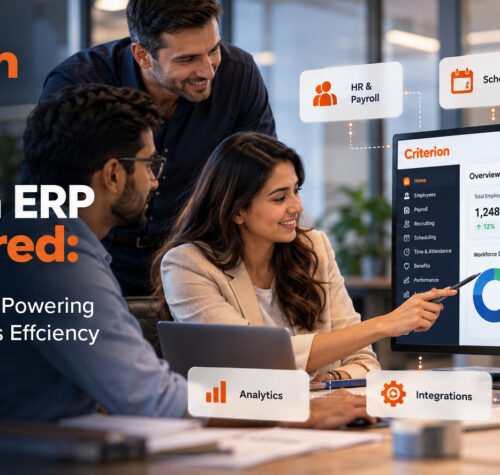
Criterion ERP Uncovered: Essential Features Powering HR and Operations Efficiency

Understanding Criterion ERP features is the first step for any mid-sized organization looking to unify HR, payroll, talent engagement, finance, and operations in a single cloud-based system. Criterion is a human capital management focused ERP platform built to streamline everyday people processes while integrating tightly with core business functions like accounting and supply chain, which helps growing companies reduce manual work and data duplication.

Core Criterion ERP Features That Boost Daily Productivity

At its heart, Criterion centralizes HR data such as employee records, benefits, performance information, and time tracking in one database, which improves accuracy and visibility for HR teams. Real-time, drag-and-drop dashboards and user-centric analytics allow managers to track key HR and payroll KPIs and make informed decisions without waiting for month-end reports.

Routine processes like payroll runs, tax calculations, and benefits deductions can be automated, including support for multiple entities and multi-country tax rules, so payroll teams spend less time on checks and more time on analysis. On the operations side, scheduling modules help track assignments, locations, and shifts, which is particularly valuable for field service, construction, or multi-site organizations that need tight coordination between HR and operations.

Integration Strengths That Reduce Silos

Criterion is designed with open, extensible architecture and APIs so it can integrate with major cloud ERP systems such as Acumatica and Sage Intacct. This allows HR, payroll, and financial data to flow automatically between systems, reducing double entry, reconciliation work, and opportunities for human error.

Advanced integrations also extend to recruiting and job boards, with connectors to platforms like Indeed and ZipRecruiter, so applicant data flows into the HR system without manual copy and paste. For IT and operations leaders, this API-first design helps consolidate tools over time and create a single source of truth for both people and financial data.

Built to Scale With Business Growth

As organizations grow, Criterion’s modular design lets them start with core HR and payroll and then add capabilities such as recruiting, scheduling, or advanced analytics when needed, keeping implementation costs manageable. Centralized analytics dashboards and customizable KPIs help forecast workforce needs, overtime costs, and labor distribution, which supports more accurate budgeting and capacity planning.

Industry research shows that companies implementing ERP and HCM platforms to automate workflows can reduce operational costs by 23 percent on average and shorten process cycle times by 24 percent. By automating HR and payroll, and linking them to finance and operations, Criterion supports similar cost savings and waste reduction in mid-sized businesses that lack large back-office teams.

Real-World Impact in Mid-Sized Sectors

Criterion is particularly attractive to mid-sized organizations that need enterprise-grade HR capabilities without the complexity of legacy suites. Case studies highlight implementations where customers replaced three separate HR tools with Criterion, automated manual processes, and met tight project timelines using a single configurable platform.

For industries such as professional services, non-profits, and project-based businesses, the combination of workforce scheduling, time tracking, and integrated payroll improves processing speed and helps maintain compliance with labor regulations. With employees able to manage their own profiles, time off, and forms through self-service portals, HR teams can shift focus from administration to strategic workforce planning, which is the real value of a modern HCM-focused ERP like Criterion.

Let’s Solve Your ERP Challenges Together!

We’d love to hear from you! Tell us what ERP or business challenges you’re currently facing — and we’ll get back to you with tailored insights, solutions, or resources.

163 views

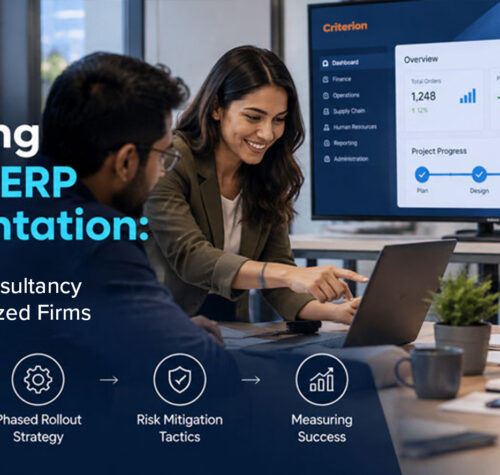
Navigating Criterion ERP Implementation: A Step-by-Step Consultancy Blueprint for Mid-Sized Firms

A well-planned Criterion ERP implementation can make or break a mid-sized firm’s digital transformation. Mid-sized firms often struggle with ERP rollouts due to legacy system integration headaches and employee pushback against change. Criterion ERP shines here with its intuitive dashboards for easy data access and robust APIs that connect old and new systems smoothly, paving the way for success.

Auditing Before Your Criterion ERP Implementation

Kick off your Criterion ERP journey with a solid audit to spot risks early. Start a gap analysis by mapping current workflows against Criterion’s features, using its data validation tools to ensure accuracy and curb scope creep, which plagues over half of ERP projects.

Next, chart stakeholders from finance leads to frontline users, gauging their influence and concerns via structured mapping. Project ROI by estimating gains like 20-30% faster processes, setting realistic benchmarks before committing resources.

  • Review existing systems thoroughly.
  • Identify integration gaps.
  • Forecast costs and benefits.

This blueprint keeps projects on track and budgets intact.

Phased Rollout Strategy

Adopt a phased approach to minimize shocks: design first by configuring Criterion’s flexible modules to fit your needs. Test rigorously in waves, leveraging advanced APIs for legacy bridging, then go-live module by module for controlled momentum. This phased approach to Criterion ERP implementation cuts disruptions compared to big-bang launches, allowing tweaks as you go.

Real-world stats show phased rollouts boost success rates to 67% for mid-sized firms.

Risk Mitigation Tactics

Combat risks head-on with hands-on training programs that build user confidence, turning skeptics into champions. Set real-time monitoring checkpoints during rollout to catch issues fast, backed by Criterion’s dashboards for instant insights.

Post-launch, lean on ongoing support like helpdesks and updates to squash glitches. Britton Electric dodged payroll pitfalls this way, enjoying seamless ERP ties from day one.

Measuring Success

Track wins with clear KPIs: aim for 20-50% drops in processing times, higher operational efficiency, and quick user adoption rates. Britton Electric slashed slow legacy drags within six months, proving Criterion’s speed in action. Regular reviews of metrics like order cycle times ensure lasting gains. Firms hitting these marks often see ROI double within a year.

Let’s Solve Your ERP Challenges Together!

We’d love to hear from you! Tell us what ERP or business challenges you’re currently facing — and we’ll get back to you with tailored insights, solutions, or resources.