


19 views

Modern ERP for Legacy Systems: How IFS and SAP Drive Transformation

Modern ERP for legacy systems is no longer optional for businesses struggling with outdated technology and slow processes. Legacy platforms often create data silos, limit scalability, and increase security risks, making it difficult for organizations to respond to market demands. Modern ERP solutions like IFS and SAP address these challenges by enabling real-time visibility, seamless integration, and scalable operations that support sustainable growth.

Key Limitations of Legacy Systems Affecting Growth 

  • Inability to Scale with Business Expansion: Legacy ERPs were designed for past business needs and often lack scalability to handle increased transaction volumes or additional users. This limits a company’s ability to grow operations efficiently without costly workarounds or system failures. 
  • Fragmented and Manual Processes: Older systems tend to have disconnected modules requiring manual data transfers and reconciliations. This results in errors, delays, and inefficient workflows that undermine productivity and slow response times. 
  • Limited Integration Capabilities: Many legacy systems cannot easily integrate with newer cloud applications, SaaS platforms, or emerging technologies, creating data silos and preventing the unified data access required for agile operations and informed decision-making. 
  • Outdated Technology and Lack of Modern Features: Legacy ERPs often run on obsolete technology stacks without support for mobile access, real-time analytics, AI, machine learning, and Internet of Things (IoT) integrations that modern businesses need to innovate and optimize. 
  • Inflexibility to Support New Business Models: Legacy systems struggle to adapt to evolving business strategies such as subscription services, e-commerce, or international expansion, due to rigid architectures not designed for flexibility or rapid change. 
  • Security and Compliance Risks: Older platforms may lack support for modern security protocols, multi-factor authentication, and compliance management tools, exposing businesses to higher risks amid increasingly complex regulatory environments. 

Introducing IFS and SAP: Modern ERP Solutions 

Modern ERP platforms like IFS and SAP offer integrated, scalable, and cloud-ready solutions that replace fragmented legacy infrastructure. IFS provides robust modules across finance, manufacturing, supply chain, and customer service, enhancing visibility and collaboration. SAP ERP is known for its comprehensive approach to managing core business processes, backed by advanced analytics and automation capabilities. 

How Consultancy Firms Drive ERP Transformation 

Consultancy firms assess the current IT environment and business processes to recommend the most suitable ERP solution. Their expertise in legacy system evaluation, change management, and data migration ensures a tailored and smooth transition. Consultants help manage risks and provide user training, alleviating common challenges during implementation. 

Real-World Success Stories of ERP Migration 

Many businesses that partnered with consultancies to move from legacy systems to IFS or SAP have reported significant gains. Companies using IFS Cloud highlight improved asset management, enhanced workforce scheduling, and streamlined supply chains, leading to cost savings. SAP customers have seen increased operational efficiency through unified workflows and data-driven strategies, boosting innovation. 

Measuring ROI and Strategic Benefits 

Consultancy-led ERP projects often deliver impressive returns on investment. Beyond cutting costs, these transitions enable better customer experiences, faster time-to-market, and enhanced regulatory compliance. The strategic advantages of modern ERP include agility to respond to market opportunities and resilience against disruptions. 

Conclusion: The Necessity of Expert Consultancy for ERP Success 

Switching from legacy software to modern ERP platforms like IFS and SAP is complex and critical. Expert consultancy is essential to navigate this complexity, align technology with business goals, and ensure change is embraced across the organization. This partnership unlocks the full potential of ERP, empowering legacy businesses to thrive in today’s competitive landscape. 

Let’s Solve Your ERP Challenges Together!

We’d love to hear from you! Tell us what ERP or business challenges you’re currently facing — and we’ll get back to you with tailored insights, solutions, or resources.

21 views

Criterion ERP for Construction: Streamlining Operations Effectively

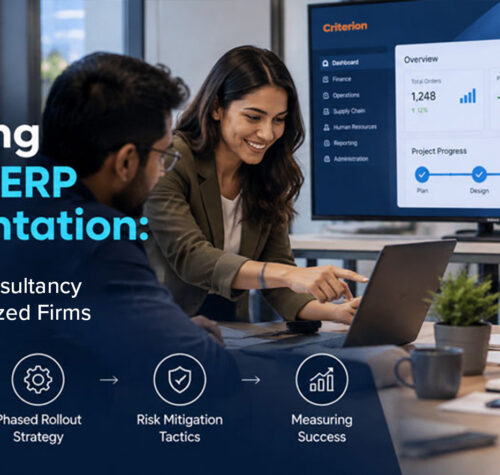
Criterion ERP for Construction is designed to help construction companies manage increasingly complex projects with greater efficiency and control. By centralizing project management, workforce operations, payroll, and compliance into a single platform, Criterion enables construction firms to reduce administrative burdens, improve coordination, and deliver projects on time and within budget.

Introduction to Criterion Software in Construction 

Criterion Software is an ERP system built with the construction industry in mind. Unlike generic ERP platforms, Criterion incorporates modules and workflows that address the intricacies of construction projects—from workforce compliance to complex payroll scenarios. It provides a unified platform for managing HR, payroll, talent engagement, and operational processes in one seamless environment. This relevance to construction has made it a preferred choice for firms seeking a dedicated solution to improve efficiency and reduce administrative burdens. 

Key Construction Modules in Criterion 

Criterion’s core modules serve the critical functions of construction operations: 

  • Project Management: Criterion centralizes all project data, enabling managers to track milestones, monitor progress, allocate resources, and ensure timely delivery. 
  • Resource Scheduling: It optimizes workforce allocation and equipment use, minimizing downtime and balancing workloads across projects. 
  • Procurement: This module manages material sourcing, purchase orders, and inventory, reducing waste and ensuring materials arrive on time to prevent project delays. 
  • Payroll and HR: Criterion handles complex payroll processes for construction workers, including compliance with union rules and collective bargaining agreements. It streamlines onboarding, training, and employee engagement to retain top talent. 

For example, Smith & Long Construction leveraged Criterion’s integrated HCM and payroll functionalities to improve work-time compliance and payroll accuracy across multiple job sites, leading to smoother operations and better workforce management. 

Enhancing Reporting and Analytics 

One of Criterion’s significant advantages lies in its advanced reporting and analytics capabilities. Construction managers can generate customizable reports and access real-time dashboards showing project performance metrics, labor productivity, cost tracking, and compliance status. These insights empower leadership to make informed decisions quickly, identify risks early, and adjust plans to keep projects on track financially and operationally.  

Integration with Construction Technologies 

The platform’s seamless integration capabilities allow it to connect with other construction technologies such as accounting systems, field management apps, and specialized HR tools. This interoperability creates a cohesive ecosystem where data flows effortlessly between systems, avoiding redundancy and facilitating better communication between office teams and field workers. Mobile access ensures that teams on-site can update information instantly, enhancing visibility and responsiveness. 

Benefits for Mid-Sized Construction Firms 

Mid-sized construction firms particularly benefit from adopting Criterion Software due to its scalability, construction-specific design, and ease of use. By automating manual tasks like payroll processing and resource scheduling, Criterion reduces administrative overhead and operational inefficiencies. Its compliance features prevent costly legal issues related to labor laws and union requirements, while its training management tools support employee development and retention. Firms gain improved financial control and transparency, enabling tighter budget adherence and profitability. 

Best Practices for Consulting on Criterion Deployment 

Implementing Criterion successfully requires a thoughtful approach: 

  • Begin with a detailed needs assessment that involves all key stakeholders from project managers to HR teams. 
  • Customize workflows within Criterion to reflect the unique processes and compliance requirements of the firm. 
  • Provide comprehensive training and ongoing support to ensure smooth user adoption across office and field teams. 
  • Regularly update the system and workflows based on project feedback and evolving industry standards to maximize ROI. 

In conclusion, Criterion Software offers a comprehensive ERP solution tailored to streamline construction operations effectively. By integrating project management, resource scheduling, procurement, and payroll into a single platform, it enhances operational efficiency and decision-making for mid-sized construction firms. Embracing Criterion helps companies meet complex project demands with agility while maintaining compliance and controlling costs.

Let’s Solve Your ERP Challenges Together!

We’d love to hear from you! Tell us what ERP or business challenges you’re currently facing — and we’ll get back to you with tailored insights, solutions, or resources.

Acumatica ERP for Construction: Enabling Project Success

Acumatica ERP is a cloud-based software solution tailored specifically for the construction industry. It empowers construction companies by integrating project management, financials, field service, and other essential functions into one unified platform. The system is designed to streamline complex construction operations, providing real-time insights, collaboration tools, and financial controls that are critical for project success. 

Managing Construction Projects with Acumatica 

Acumatica offers robust project management features that enable real-time tracking of construction projects. It includes tools for daily field reports, Requests for Information (RFIs), submittals, photo logs, and issue tracking. This comprehensive visibility keeps project teams in sync across office and job sites, minimizing delays and accelerating problem resolution. Mobile access allows field workers to update project statuses instantly, ensuring accurate and timely data sharing throughout the project lifecycle. 

Financial Management for Construction 

One of Acumatica’s strengths is its integrated financial management capabilities tailored for construction. It combines project accounting with core financial modules including budgeting, job costing, invoicing, payroll, and accounts payable and receivable. This integration provides a 360-degree view of project costs and financial status, enabling companies to stay on budget and improve profitability. Automated billing linked to contracts and change orders streamlines invoicing and helps eliminate errors. 

Field Service Integration 

Acumatica seamlessly connects office operations with field service management to enhance coordination between teams. The Field Service module supports equipment management, scheduling, inventory tracking, and service contract management. Field technicians can access service orders, customer history, and equipment details on mobile devices, facilitating efficient service delivery and reducing downtime. This connection boosts productivity and customer satisfaction across construction projects. 

Case Studies  

Several construction firms have reported significant improvements after adopting Acumatica. For example, Roberts Glass, a glass manufacturing and installation company, enhanced productivity and decision-making by leveraging Acumatica’s mobile access and project management features. The integration with time tracking software further improved labor cost visibility and financial control. Another success story is New England Tile, which switched from legacy ERP to Acumatica to reduce costs, improve customer service, and enable cloud-based operations. 

Tips for Successful Acumatica Implementation in Construction 

Successful ERP implementation requires thoughtful preparation. Key tips include aligning stakeholders early, defining clear goals, and ensuring proper training. Planning realistic timelines and involving end users throughout can minimize disruption. Leveraging best practices such as pre-implementation checklists and risk mitigation strategies helps construction companies fully realize Acumatica’s benefits and optimize business processes. 

Conclusion 

Acumatica Construction Edition delivers a comprehensive, cloud-based platform that empowers construction companies with the tools to effectively manage projects, finances, and field operations. Its real-time insights, seamless integrations, and mobile capabilities drive improved collaboration, control, and profitability—key ingredients for project success in today’s competitive construction landscape. 

Let’s Solve Your ERP Challenges Together!

We’d love to hear from you! Tell us what ERP or business challenges you’re currently facing — and we’ll get back to you with tailored insights, solutions, or resources.

93 views

SAP Ecosystem Trends, Tools, and Digital Transformation in 2025

SAP is a cornerstone in enterprise IT, renowned for its robust enterprise resource planning (ERP) solutions that help organizations streamline complex business processes. At the heart of SAP’s offerings is SAP S/4HANA, a next-generation ERP suite built on the in-memory SAP HANA database, designed to run intelligent enterprises with real-time data processing and analytics. Alongside S/4HANA, products like BW/4HANA for data warehousing and SAP Leonardo for IoT and AI integration expand SAP’s digital transformation capabilities across industries.

Key Trends in SAP Ecosystem

A major trend in 2025 is the accelerated migration from legacy SAP ECC systems to SAP S/4HANA, driven by the upcoming 2027 end of support for ECC. Organizations are choosing cloud migration paths such as SAP’s RISE and GROW offerings, which promote a “clean core” ERP system to reduce customizations and foster agility. Integration of artificial intelligence and machine learning within S/4HANA enhances operational efficiency through predictive analytics, intelligent automation, and real-time decision support, transforming businesses into data-driven entities.

Maximizing Potential with Enhancements and Add-ons

SAP ecosystem continues to innovate with embedded analytics that combine transactional processing and real-time analytics on a unified platform, thereby empowering users across roles to make faster, informed decisions. Tools like SAP Fiori provide a user-friendly interface accessible on any device, boosting user engagement and streamlining workflows. Add-ons like Extended Warehouse Management (EWM) and Transportation Management (TM) optimize logistics and inventory, crucial for sectors like manufacturing and retail.

SAP Across Industries

In manufacturing, SAP solutions enable smart factories with integrated production planning, quality management, and supply chain orchestration to reduce costs and improve product delivery. Retail benefits from SAP Commerce Cloud, unified merchandise management, and AI-driven customer insights to deliver personalized shopping experiences and omnichannel sales. Logistics gains from real-time asset monitoring through IoT enabled by SAP Leonardo, enhancing transportation efficiency and supply chain resilience.

Tips for Successful SAP Ecosystem Implementation and Change Management

Successful SAP deployment relies on thorough project preparation, defining clear business objectives, and building a cross-functional implementation team.

  • Creating a detailed business blueprint that maps processes and customizations ensures alignment with organizational needs.
  • Strong change management is essential to foster user adoption and mitigate disruption.
  • Continuous support post-go-live helps sustain improvements and evolve processes.

Staying Updated on SAP Ecosystem

Industry professionals can stay current with SAP developments by following expert blogs, newsletters dedicated to SAP S/4HANA, and interviews with SAP thought leaders. Participating in SAP community forums and attending webinars also provide insights into best practices and emerging trends [implied from general knowledge].

Conclusion

The SAP ecosystem is evolving rapidly with cloud adoption, AI integration, and enhanced analytics driving enterprise digital transformation. Organizations leveraging SAP’s comprehensive tools and strategic implementation can anticipate improved agility, operational excellence, and sustained competitive advantage in a dynamic global market.

This overview highlights that navigating SAP today means embracing technological innovation while managing complex change—an imperative journey for companies aiming to thrive in the digital economy.


Let’s Solve Your ERP Challenges Together!

We’d love to hear from you! Tell us what ERP or business challenges you’re currently facing — and we’ll get back to you with tailored insights, solutions, or resources.

168 views

IFS ERP for Engineering: Driving Excellence and Innovation

In today’s fast-evolving engineering landscape, firms face ever-growing demands for precision, efficiency, and innovation. Engineering projects span complex lifecycles from initial design to ongoing maintenance, requiring seamless coordination across resources, finance, and production. Enter IFS ERP for Engineering: a powerful enterprise resource planning solution purpose-built to support engineering companies by integrating critical workflows and fostering innovation. This article explores how IFS ERP drives engineering excellence and offers practical guidance for firms aiming to harness its potential. 

Supporting Innovation in Engineering Industry Demands 

Engineering firms grapple with rising client expectations, tighter margins, and rapid technological shifts. IFS ERP’s integrated platform enables enhanced resource planning and real-time access to project data, aligning design, production, and financial management. With connected workflows, firms can innovate faster and respond agilely to changing project requirements and market conditions, turning operational complexity into competitive advantage.  

Core Features of IFS ERP for Engineering Firms 

IFS ERP for Engineering stands out for its ability to unify multiple disciplines critical for engineering success. Its comprehensive resource planning helps allocate labor, equipment, and materials efficiently. It integrates design and production data, allowing smoother transitions from conceptual design to manufacturing. Financial management tools track project budgets and ensure compliance with regulatory standards—empowering firms to maintain profitability while upholding quality.  

Supporting the Full Engineering Project Lifecycle 

IFS ERP covers every phase of engineering projects, from initial estimates through construction to maintenance. For example, EPC (engineering, procurement, and construction) firms utilizing IFS Cloud reported drastic improvements in budget visibility, vendor coordination, and on-time project delivery by leveraging tailored project-centric modules. This end-to-end visibility reduces errors, delays, and costs while supporting continuous innovation across project stages. 

Engineering Firms Adopting IFS ERP: Best Practices 

Successful IFS ERP adoption begins with thorough data preparation, ensuring legacy systems integrate seamlessly without disruptions. Equally important is investing in workforce training to encourage system mastery and cross-department collaboration. Early involvement of all stakeholders in configuration and testing phases reduces implementation risks and accelerates ROI. 

ROI Gains: Efficiency and Cost Management 

Studies show that IFS ERP delivers remarkable ROI through operational efficiency and cost savings. Organizations implementing IFS Cloud have reported up to 50% faster project deliveries in engineering firms and 20% cost reductions within the first year, attributed to automated workflows, real-time analytics, and streamlined procurement. These improvements free up resources for innovation and growth opportunities. 

Future Outlook: Adapting IFS ERP to Emerging Technologies 

Looking ahead, IFS ERP is evolving to incorporate advanced technologies such as AI-driven predictive analytics, IoT integrations for smart asset monitoring, and blockchain for enhanced transparency in supply chains. These innovations promise to further enhance decision-making, agility, and sustainability across engineering operations, ensuring firms remain competitive in a digital-first future. 

In conclusion, IFS ERP plays a pivotal role in driving engineering excellence by supporting integrated, data-driven project management, enhancing operational efficiencies, and enabling innovation. Engineering firms that strategically adopt and leverage IFS ERP position themselves for sustainable success in an increasingly complex and technology-driven industry. 

For companies exploring IFS ERP partnerships, understanding this technology’s impact on engineering workflows and innovation is crucial for selecting the right solution provider. 

Let’s Solve Your ERP Challenges Together!

We’d love to hear from you! Tell us what ERP or business challenges you’re currently facing — and we’ll get back to you with tailored insights, solutions, or resources.

104 views

IFS ERP for Construction: Consulting Insights for Better Project Delivery

In today’s fast-paced construction industry, the ability to manage complex projects efficiently can make the difference between success and costly setbacks. Enterprise Resource Planning (ERP) systems have become vital tools, helping construction companies streamline their operations, manage resources better, and improve overall project delivery. Among various ERP offerings, IFS ERP for Construction stands out as a solution uniquely suited to the construction sector, addressing many key challenges faced by firms in this space. 

The Role of ERP in Modern Construction Workflows 

Construction projects involve multiple moving parts—labor, materials, equipment, contracts, and compliance requirements—that must align perfectly to meet deadlines and budgets. Traditional management methods often fall short in providing real-time visibility and agile coordination. ERP systems integrate these components into a single platform, allowing better planning, tracking, and decision-making. This integration is crucial for improving productivity, reducing waste, and avoiding costly delays.  

Why IFS ERP is Tailored for Construction Firms 

IFS ERP is designed with construction businesses in mind. It offers specialized functionalities such as advanced project management, procurement automation, financial control, and compliance monitoring. Additionally, IFS supports mobile and cloud access, enabling project teams to collaborate from anywhere—on-site or in the office—ensuring real-time updates and faster issue resolution.  

Addressing Industry Challenges with IFS ERP for Construction

One of the most common challenges in construction projects is cost overruns and schedule delays. According to a 2020 McKinsey report, large construction projects typically take 20% longer to finish than planned and can exceed initial budgets by up to 80%. IFS ERP helps mitigate these issues by providing accurate project tracking, budgeting tools, and risk management features that alert stakeholders to potential problems early. 

The construction supply chain is often complex, involving multiple suppliers and contractors. Coordinating these parties requires transparent communication and efficient workflows. IFS ERP’s supply chain management capabilities simplify procurement, improve supplier collaboration, and ensure timely delivery of materials, reducing bottlenecks. 

Consultant specialists begin an IFS ERP implementation by thoroughly assessing the client’s unique needs and industry-specific workflows. This assessment ensures that the system configuration aligns with the firm’s project methods, compliance standards, and operational goals. Key IFS modules are then tailored for project management, procurement, and regulatory compliance to maximize the platform’s value. 

Conclusion 

For construction firms aiming to boost project delivery performance, an IFS ERP solution implemented with expert consultancy can be a game-changer. By addressing cost control, schedule adherence, supply chain coordination, and compliance, IFS ERP equips companies with the digital tools needed to thrive in a competitive landscape. Thoughtful configuration and ongoing support ensure the system adapts as project complexities evolve, empowering firms to build smarter and deliver better.

Let’s Solve Your ERP Challenges Together!

We’d love to hear from you! Tell us what ERP or business challenges you’re currently facing — and we’ll get back to you with tailored insights, solutions, or resources.
Overcoming ERP Challenges with Effective Criterion ERP Implementation

Implementing an ERP system can be complex, often presenting challenges like scope creep, resistance to change, and integration issues. Criterion ERP implementation stands out by combining advanced integration capabilities with user-friendly interfaces and customizable dashboards. This approach helps bridge gaps between legacy systems and modern ERP needs, ensuring a seamless transition tailored to each company’s unique processes. 

Identifying and Addressing Top Challenges in ERP Projects 

Common hurdles in ERP implementation include unclear project scope, change management struggles, data migration errors, and budget overruns. For instance, many companies face resistance from users unfamiliar with new systems, while poorly defined objectives cause delays and inefficiencies. Research shows that over half of ERP implementations fail on the first attempt due to such issues, with many projects running 30% longer and costing up to four times more than planned. 

How Criterion ERP’s Tools Mitigate Implementation Risks 

Criterion ERP addresses these risks through robust data validation tools, streamlined integration features, and flexible configuration options that avoid excessive customization. Its dashboards and search capabilities enable quick access to critical data, reducing operational slowdowns. The system’s advanced APIs facilitate smooth bridging with legacy components, minimizing disruptions during rollout. 

criterion erp implementation best practices

Ensuring Stakeholder Buy-In and User Adoption 

Securing early and continuous stakeholder involvement is critical for successful ERP adoption. Engaging users and management throughout the process aligns expectations and reduces resistance. Studies show that early stakeholder engagement can increase project success rates by up to 50%. Criterion supports this by providing clear communication channels and training resources, helping users understand benefits and adapt confidently. 

Effective Project Management Methodologies with Criterion ERP 

Successful implementation relies heavily on structured project management practices, including risk identification, timeline management, and ongoing monitoring. Criterion advocates for detailed planning and realistic budgeting, with frequent checkpoints to prevent scope creep. This disciplined approach ensures timely delivery while maintaining alignment with business goals. 

Post-Implementation Support and Continuous Improvement 

ERP success extends beyond launch. Criterion emphasizes comprehensive post-implementation support—offering training, meticulous documentation, and maintenance programs. This proactive model reduces downtime, supports continuous system refinement, and maximizes return on investment by adapting to evolving business needs. 

Lessons from Successful Criterion ERP Implementations 

Take Britton Electric as an example. Facing complex payroll integration and legacy system challenges, they chose Criterion for its ease of use and integration strength. Within six months, Britton experienced faster processing times and reliable support, attributing their smoother ERP transition and operational improvements to Criterion’s tailored solutions and ongoing partnership. 

By following these best practices with Criterion ERP, companies can overcome common implementation pitfalls, ensuring a smoother, more efficient journey from deployment to ongoing success. 

Let’s Solve Your ERP Challenges Together!

We’d love to hear from you! Tell us what ERP or business challenges you’re currently facing — and we’ll get back to you with tailored insights, solutions, or resources.
150 views

How Criterion Software for Construction Streamlines Project Operations

Construction companies today face increasingly complex projects that require efficient coordination across multiple functions. Criterion Software for Construction, a robust enterprise resource planning (ERP) system, offers valuable tools tailored specifically for the construction industry to address these challenges effectively.

Introduction to Criterion Software for Construction

Criterion Software is an ERP system built with the construction industry in mind. Unlike generic ERP platforms, Criterion incorporates modules and workflows that address the intricacies of construction projects—from workforce compliance to complex payroll scenarios. It provides a unified platform for managing HR, payroll, talent engagement, and operational processes in one seamless environment. This relevance to construction has made it a preferred choice for firms seeking a dedicated solution to improve efficiency and reduce administrative burdens.

Key Construction Modules in Criterion

Criterion’s core modules serve the critical functions of construction operations:

  • Project Management: Criterion centralizes all project data, enabling managers to track milestones, monitor progress, allocate resources, and ensure timely delivery.
  • Resource Scheduling: It optimizes workforce allocation and equipment use, minimizing downtime and balancing workloads across projects.
  • Procurement: This module manages material sourcing, purchase orders, and inventory, reducing waste and ensuring materials arrive on time to prevent project delays.
  • Payroll and HR: Criterion handles complex payroll processes for construction workers, including compliance with union rules and collective bargaining agreements. It streamlines onboarding, training, and employee engagement to retain top talent.

For example, Smith & Long Construction leveraged Criterion’s integrated HCM and payroll functionalities to improve work-time compliance and payroll accuracy across multiple job sites, leading to smoother operations and better workforce management.

Enhancing Reporting and Analytics

One of Criterion’s significant advantages lies in its advanced reporting and analytics capabilities. Construction managers can generate customizable reports and access real-time dashboards showing project performance metrics, labor productivity, cost tracking, and compliance status. These insights empower leadership to make informed decisions quickly, identify risks early, and adjust plans to keep projects on track financially and operationally.

Integration with Construction Technologies

The platform’s seamless integration capabilities allow it to connect with other construction technologies such as accounting systems, field management apps, and specialized HR tools. This interoperability creates a cohesive ecosystem where data flows effortlessly between systems, avoiding redundancy and facilitating better communication between office teams and field workers. Mobile access ensures that teams on-site can update information instantly, enhancing visibility and responsiveness.

Benefits for Mid-Sized Construction Firms

Mid-sized construction firms particularly benefit from adopting Criterion Software due to its scalability, construction-specific design, and ease of use. By automating manual tasks like payroll processing and resource scheduling, Criterion reduces administrative overhead and operational inefficiencies. Its compliance features prevent costly legal issues related to labor laws and union requirements, while its training management tools support employee development and retention. Firms gain improved financial control and transparency, enabling tighter budget adherence and profitability.

Best Practices for Consulting on Criterion Deployment

Implementing Criterion successfully requires a thoughtful approach:

  • Begin with a detailed needs assessment that involves all key stakeholders from project managers to HR teams.
  • Customize workflows within Criterion to reflect the unique processes and compliance requirements of the firm.
  • Provide comprehensive training and ongoing support to ensure smooth user adoption across office and field teams.
  • Regularly update the system and workflows based on project feedback and evolving industry standards to maximize ROI.

In conclusion, Criterion Software offers a comprehensive ERP solution tailored to streamline construction operations effectively. By integrating project management, resource scheduling, procurement, and payroll into a single platform, it enhances operational efficiency and decision-making for mid-sized construction firms. Embracing Criterion helps companies meet complex project demands with agility while maintaining compliance and controlling costs.

Let’s Solve Your ERP Challenges Together!

We’d love to hear from you! Tell us what ERP or business challenges you’re currently facing — and we’ll get back to you with tailored insights, solutions, or resources.

237 views

SAP ERP for Modern Manufacturing: Why Today’s Factories Need It

Modern manufacturers are rapidly shifting from traditional operational models to digital-first systems — and this is where SAP ERP for Modern Manufacturing becomes essential. As production environments grow more complex with multi-stage workflows, supply chain dependencies, and increasing pressure for efficiency and agility, legacy systems fail to keep up. SAP ERP empowers manufacturing companies with real-time visibility, automation, integrated planning, and improved decision-making — transforming how factories operate and compete.

Core SAP ERP Capabilities for Manufacturing 

End-to-End Production Process Management 

SAP ERP provides comprehensive functionality for planning, execution, and control of production activities. The Production Planning module enables manufacturers to develop production plans and schedules based on sales, operations, and inventory plans, while taking advantage of real-time feedback loops from manufacturing and logistic execution. 

SAP S/4HANA transforms manufacturing by integrating production and quality management processes, creating a cohesive system that spans Production Planning (PP), Quality Management (QM), Plant Maintenance (PM), and Manufacturing Execution Systems (MES). This integration enables manufacturers to move beyond classic material requirements planning (MRP) to more sophisticated planning that incorporates capacity and material constraints. 

Demand Forecasting and Inventory Optimization 

Modern SAP ERP systems equipped with advanced forecasting modules can analyze historical data, market trends, and other relevant factors to predict future demand more accurately. This capability is crucial for manufacturing companies, as accurate demand forecasting enables businesses to optimize their inventory levels to meet customer demand while minimizing excess stock. 

The system’s AI-driven supply chain optimization encompasses predictive analytics, machine learning, and autonomous decision-making systems, aimed at optimizing demand forecasting, inventory management, production planning, and logistics optimization. Manufacturing entities using AI-enhanced SAP systems have realized 35% reduction in unplanned downtime and 22% decrease in working capital requirements. 

Financial Integration and Cost Control 

SAP ERP’s financial integration capabilities enable real-time cost tracking, better financial planning, and increased competitive advantage in manufacturing. The system provides a structured cost breakdown that allows companies to monitor and control each aspect of their financial outlay, from lead generation to order closure. 

Manufacturing companies using SAP ERP benefit from faster financial close, more accurate job costing, and the ability to amalgamate finances and expenses all in one place, in a globally consistent format. This integration ensures that production costs are tracked in real-time, enabling better decision-making and improved profitability. 

Benefits of SAP ERP Adoption in Manufacturing 

Improved Operational Efficiency 

Studies have shown that businesses using SAP S/4HANA can see up to a 30% increase in productivity and up to a 40% reduction in operational costs. Russian manufacturing companies implementing SAP ERP systems showed significant benefits in operational efficiency, with the effects persisting up to a year post-implementation. 

Research on manufacturing companies revealed that SAP ERP implementation substantially improves production planning, resource allocation, and overall supply chain performance. The integration enables 30–50% reductions in machine downtime, 10–30% boosts in throughput, 15–30% gains in labor productivity, and an 85% increase in forecasting accuracy.  

Enhanced Data Accuracy and Decision-Making 

SAP ERP’s analytics and reporting capabilities provide comprehensive insights into manufacturing operations through embedded business intelligence that integrates seamlessly with existing operations. The system enables manufacturers to access real-time insights without switching between multiple platforms, facilitating improved decision-making through real-time data processing and advanced analytics capabilities. 

Manufacturing companies benefit from comprehensive support in capacity and sequence planning, with real-time reporting enabling manufacturers to adapt swiftly to market changes and reduce lead times. The system’s data accuracy improvements can reach up to 95%, making it easier to make informed decisions. 

Conclusion 

SAP ERP has evolved from a traditional enterprise resource planning system into a comprehensive digital enabler that orchestrates complex manufacturing processes. With global digital transformation spending reaching unprecedented levels and 95% of manufacturing companies recognizing digitalization as essential to their future success, SAP ERP provides the foundation for intelligent manufacturing operations. 

The evidence is compelling: manufacturers implementing SAP ERP achieve substantial improvements in operational efficiency, cost reduction, and decision-making capabilities. From 30-50% reductions in machine downtime to 85% increases in forecasting accuracy, the quantifiable benefits demonstrate SAP ERP’s essential role in modern manufacturing. 

Let’s Solve Your ERP Challenges Together!

We’d love to hear from you! Tell us what ERP or business challenges you’re currently facing — and we’ll get back to you with tailored insights, solutions, or resources.

153 views

How SAP ERP for Manufacturing Transforms Industrial Equipment Production

IFS ERP Gartner recognition underscores its position as a leading Cloud ERP solution for product-centric industries. As the only vendor named a Customers’ Choice in Gartner’s 2025 Peer Insights, IFS demonstrates exceptional user satisfaction, strong performance, and industry-aligned capabilities that drive real business impact.

In today’s competitive landscape, product-centric industries require ERP solutions that not only manage complex manufacturing and asset-related processes but also drive innovation and flexibility. IFS ERP has emerged as a leading choice, uniquely recognized as the only company named a Customers’ Choice in Gartner’s 2025 Peer Insights for Cloud ERP specifically for product-centric enterprises. This distinction highlights IFS’s exceptional customer satisfaction and adoption levels in a crowded marketplace. 

Gartner Peer Insights Voice of the Customer is a prestigious accolade based on verified customer reviews collected over 18 months. It reflects real user experiences and feedback on vendors’ performance across key criteria like overall satisfaction, product functionality, support, and ease of use. Being the sole Customers’ Choice in the Cloud ERP category for product-centric industries underlines IFS’s outstanding reputation and trust among its user base. 

Several features drive this high customer satisfaction with IFS ERP. Users praise its user-friendly and highly configurable system, which accommodates the diverse and evolving needs of manufacturing, engineering, and service organizations. The platform offers robust capabilities in asset management, manufacturing, and service industry processes, enabling seamless integration of operations and enhanced control over production and maintenance workflows. Importantly, IFS integrates industrial AI (IFS.ai) directly into its solution. This embedded AI enables data-driven decision-making, predictive maintenance, optimized scheduling, and intelligent resource allocation, making businesses future-ready in a dynamic environment. 

Successful IFS ERP implementations in product-centric companies rely on best practices that emphasize clear business goal definition, structured project governance, and collaborative change management. Comprehensive training and user adoption strategies are crucial, as reflected in customer reviews, to fully leverage the system’s configurability and AI-powered insights. These practices empower organizations to adapt workflows efficiently while capitalizing on IFS ERP’s innovative capabilities. 

In sum, IFS ERP’s unique combination of user-centered design, robust industry-specific functions, and embedded artificial intelligence designates it as a highly trusted and innovative Cloud ERP solution. Gartner’s Customers’ Choice recognition confirms that IFS continues to lead as the preferred partner for product-centric enterprises seeking a scalable, intelligent, and adaptable ERP system in 2025. 

For companies exploring Cloud ERP providers, IFS stands out for delivering exceptional value, customer satisfaction, and future-proof technological integration in demanding industrial landscapes. 

Let’s Solve Your ERP Challenges Together!

We’d love to hear from you! Tell us what ERP or business challenges you’re currently facing — and we’ll get back to you with tailored insights, solutions, or resources.