50 views

Choosing the Right ERP Consultant for Epicor Kinetic in Manufacturing

Picking the right ERP consultant for Epicor Kinetic can make or break your manufacturing rollout. Get it right, and you’ll unlock efficiency gains like those seen by companies boosting overall equipment effectiveness (OEE) from 75% to 85%.

Vet Consultants Effectively

Start with targeted questions to gauge fit. Ask about their experience with Epicor Kinetic in discrete manufacturing, specific modules like production planning or MRP, and success rates on similar projects. Probe for details on handling make-to-order versus make-to-stock scenarios.

Vetting an ERP consultant for Epicor Kinetic this way helps dodge the 73% failure rate seen in manufacturing ERP implementations.

Essential Qualifications

Seek Epicor-certified professionals with Kinetic-specific credentials, renewed for the latest versions. Prioritize manufacturing industry experience, such as job management or quality assurance implementations.

Certified consultants grasp system nuances, cutting risks from inexperienced teams that cause 35% of failures.

Scope Your Project Smartly

Define needs across financials for automated month-end closes, production management for BOMs and real-time tracking, and warehouse operations like RF-directed picking. Map current workflows, prioritize pain points, and align with Kinetic’s strengths in mixed-mode manufacturing.

Clear scoping prevents scope creep and budget overruns averaging 215% in the sector.

Spot Red Flags

Watch for vague timelines, generic recommendations that ignore manufacturing compliance, or no post-go-live support plans. A lack of industry case studies or overpromising instant ROI signals trouble.

These traps contribute to 68-73% of ERP projects missing their objectives.

Weigh Costs and Benefits

Expect pricing via fixed-fee, time-and-materials, or value-based models, and demand transparent breakdowns. Kinetic delivers strong ROI, like 373% over three years with a 9-month payback, through gains in revenue (14.2% higher) and on-time delivery (39% improvement).

Balance upfront costs against these manufacturing wins.

Success Checklist

  • Verify references from Kinetic manufacturing clients.
  • Secure SLAs covering response times and uptime.
  • Confirm long-term support for upgrades and optimization.

This ensures smooth sailing beyond launch.

Next Steps: RFP Template

Use this tailored template for Kinetic manufacturing RFPs:

  1. Company Overview: Describe your operations, scale, and manufacturing type (e.g., discrete, mixed-mode).
  2. Project Scope: List modules needed (financials, warehouse, production), timelines, and key deliverables.
  3. Consultant Qualifications: Require Epicor Kinetic certifications, 5+ manufacturing projects, and client references.
  4. Approach and Methodology: Detail implementation phases, change management, and risk mitigation.
  5. Pricing and Terms: Specify models, total cost, SLAs, and support post-go-live.
  6. Timeline and Milestones: Include scoping, design, testing, and training dates.

Customize this template and send it to shortlisted firms to get sharp, comparable responses.

Let’s Solve Your ERP Challenges Together!

We’d love to hear from you! Tell us what ERP or business challenges you’re currently facing — and we’ll get back to you with tailored insights, solutions, or resources.

194 views

Epicor Kinetic Consultancy Roadmap: From Assessment to Go-Live

An Epicor Kinetic consultancy roadmap gives manufacturers a clear, structured path from initial assessment to go-live, reducing the risk of delays and budget overruns that come with an unplanned ERP transition. This guide breaks down the key phases so your team knows what to expect at each stage.

Initial Assessment Phase

Every Epicor Kinetic consultancy roadmap starts with a thorough gap analysis that compares your current ERP setup against Kinetic’s capabilities. Consultants review existing workflows, pinpoint inefficiencies such as manual inventory tracking, and map out how Kinetic’s real-time dashboards can close those gaps.

For example, a mid-sized manufacturer discovered 30% productivity losses during assessment, which helped set clear upgrade priorities before any configuration work began.

Customization Strategies

Kinetic modules should be tailored to a manufacturer’s unique needs, especially around shop floor control and MES integration. This means configuring production scheduling tools and linking them seamlessly with existing machinery sensors for live data flow.

One automotive parts maker customized Kinetic to cut setup times by 25%, showing the value of targeted configuration over a generic, out-of-the-box setup.

Data Migration Best Practices

Clean, staged data transfers rely on Epicor’s built-in tools, such as the Data Management Workbench, to move records from legacy systems without disruption. Key pitfalls to avoid include poor data mapping and skipping validation tests, which can lead to errors in 40% of migrations when proper checks are skipped.

Testing in a pilot environment first, and migrating customer records incrementally, helps ensure accuracy and keeps downtime to a minimum.

Training and Change Management

Hands-on training programs drive user adoption among manufacturing teams. Interactive sessions should cover Kinetic’s interface with role-based modules built for operators and managers alike.

Firms with strong change management see 80% higher adoption rates, turning early resistance into enthusiasm through quick-win demos and ongoing support.

Post-Launch Optimization

After go-live, tracking KPIs like on-time delivery and inventory turnover through Kinetic’s analytics keeps the system improving. Weekly dashboard reviews of these metrics enable iterative changes, such as introducing AI-driven forecasting.

Manufacturers that follow this approach often report 15-20% efficiency gains within six months of go-live.

Let’s Solve Your ERP Challenges Together!

We’d love to hear from you! Tell us what ERP or business challenges you’re currently facing — and we’ll get back to you with tailored insights, solutions, or resources.

163 views

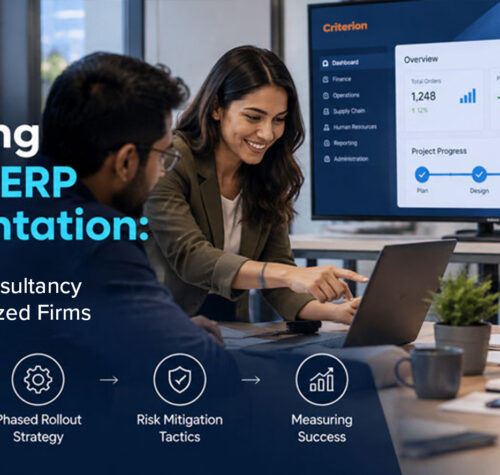
Navigating Criterion ERP Implementation: A Step-by-Step Consultancy Blueprint for Mid-Sized Firms

A well-planned Criterion ERP implementation can make or break a mid-sized firm’s digital transformation. Mid-sized firms often struggle with ERP rollouts due to legacy system integration headaches and employee pushback against change. Criterion ERP shines here with its intuitive dashboards for easy data access and robust APIs that connect old and new systems smoothly, paving the way for success.

Auditing Before Your Criterion ERP Implementation

Kick off your Criterion ERP journey with a solid audit to spot risks early. Start a gap analysis by mapping current workflows against Criterion’s features, using its data validation tools to ensure accuracy and curb scope creep, which plagues over half of ERP projects.

Next, chart stakeholders from finance leads to frontline users, gauging their influence and concerns via structured mapping. Project ROI by estimating gains like 20-30% faster processes, setting realistic benchmarks before committing resources.

  • Review existing systems thoroughly.
  • Identify integration gaps.
  • Forecast costs and benefits.

This blueprint keeps projects on track and budgets intact.

Phased Rollout Strategy

Adopt a phased approach to minimize shocks: design first by configuring Criterion’s flexible modules to fit your needs. Test rigorously in waves, leveraging advanced APIs for legacy bridging, then go-live module by module for controlled momentum. This phased approach to Criterion ERP implementation cuts disruptions compared to big-bang launches, allowing tweaks as you go.

Real-world stats show phased rollouts boost success rates to 67% for mid-sized firms.

Risk Mitigation Tactics

Combat risks head-on with hands-on training programs that build user confidence, turning skeptics into champions. Set real-time monitoring checkpoints during rollout to catch issues fast, backed by Criterion’s dashboards for instant insights.

Post-launch, lean on ongoing support like helpdesks and updates to squash glitches. Britton Electric dodged payroll pitfalls this way, enjoying seamless ERP ties from day one.

Measuring Success

Track wins with clear KPIs: aim for 20-50% drops in processing times, higher operational efficiency, and quick user adoption rates. Britton Electric slashed slow legacy drags within six months, proving Criterion’s speed in action. Regular reviews of metrics like order cycle times ensure lasting gains. Firms hitting these marks often see ROI double within a year.

Let’s Solve Your ERP Challenges Together!

We’d love to hear from you! Tell us what ERP or business challenges you’re currently facing — and we’ll get back to you with tailored insights, solutions, or resources.