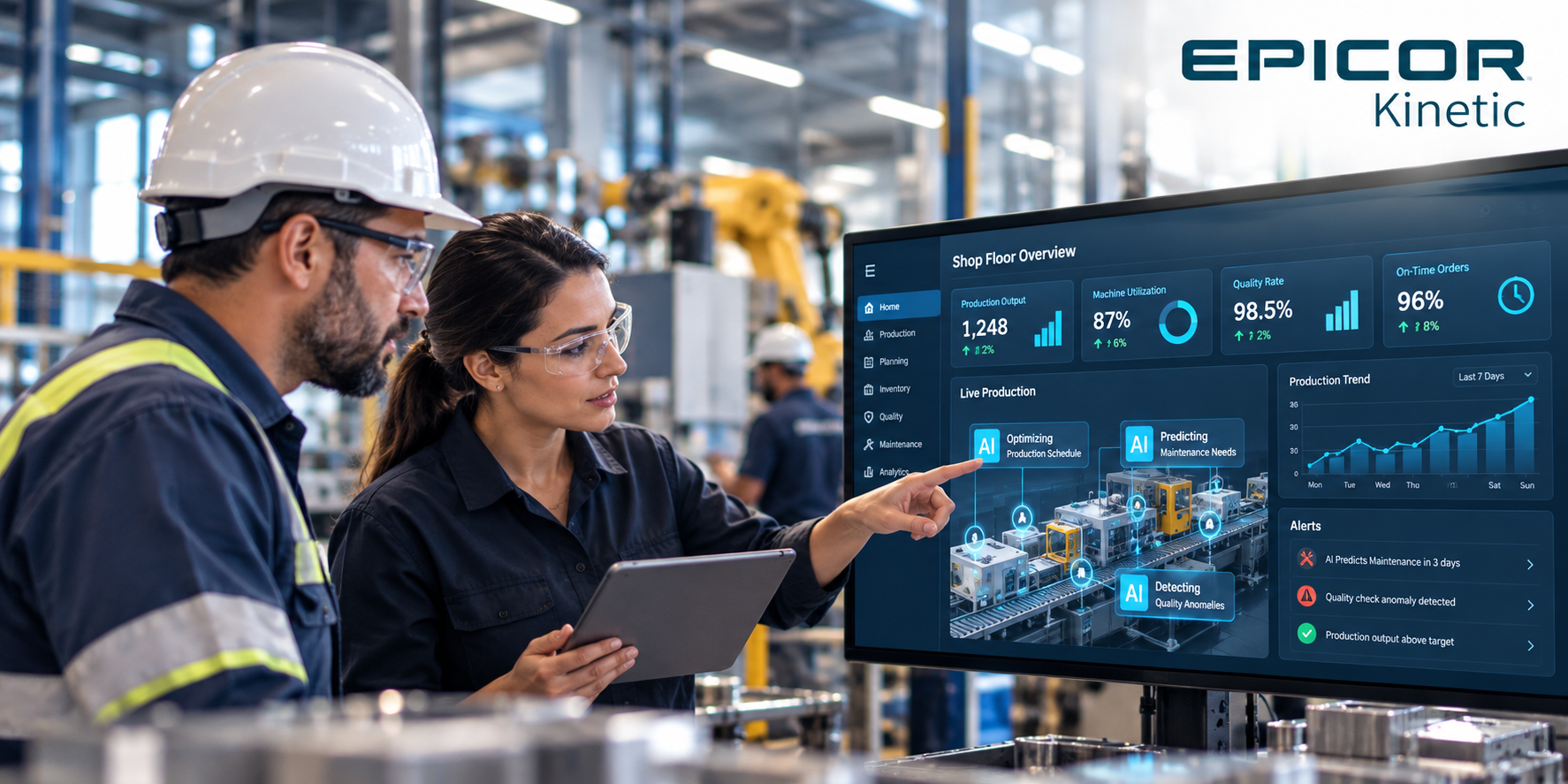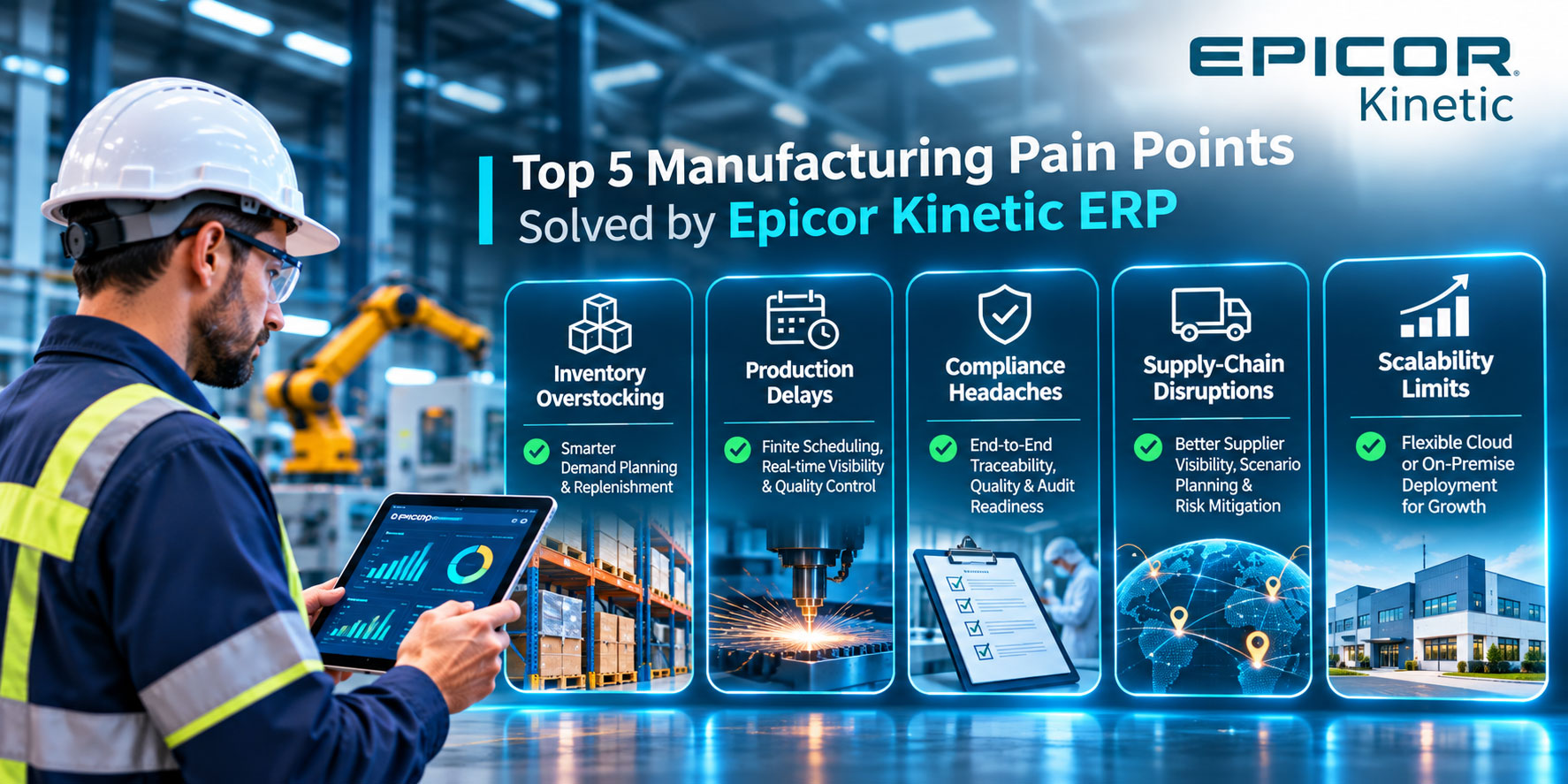

Epicor Kinetic ERP is built specifically for mid-size manufacturers, so it speaks the language of the shop floor as much as it does the boardroom. Instead of generic one-size-fits-all tools, Kinetic layers manufacturing-specific workflows on top of forecasting, scheduling, quality, and supply-chain modules. Below are five of the most common manufacturing pain points in production and how Kinetic’s capabilities can resolve them.
1. Inventory Overstocking
Pain: Many manufacturers live in a cycle of overstocking one part while running out on another, tying up working capital and obscuring real demand patterns.
Kinetic fix: Kinetic’s demand forecasting and replenishment logic work together to convert historical sales and forecasts into min-max and safety-stock calculations that drive reorder-point-based purchasing. When forecasts are in place, the system treats the reorder point as minimum stock plus safety stock plus forecasted demand over lead time, which helps buyers see what to order, when, and how much.
This approach reduces guesswork and chronic overbuying, letting you run closer to true just-in-time profiles without exposing the factory to constant stockouts.
2. Production Delays
Pain: Manual scheduling, opaque bottlenecks, and disconnected quality checks can turn what looks like a feasible plan into a late-to-ship reality.
Kinetic fix: Kinetic’s planning and scheduling module offers finite and constraint-based scheduling so you can visually spot overloaded resources and underutilized capacities. Master schedulers can drag-and-drop jobs, simulate change impacts, and run what-if scenarios before committing, all while keeping the Bill of Materials and material availability in view.
On the quality side, integrated dashboards and alerts from Epicor QMS let teams flag nonconformances early, close corrective actions faster, and reduce the number of rework loops that push jobs off schedule. The result is fewer last-minute firefighting sessions and more predictable on-time deliveries.
3. Compliance Headaches
Pain: Medical-device, food, and other regulated manufacturers must trace every batch from raw material to finished good, or face costly audits, recalls, or fines under ISO, FDA, or similar frameworks.
Kinetic fix: Kinetic builds traceability and compliance logic directly into core manufacturing processes. Lot and serial tracking from raw materials to finished goods gives manufacturers a clear genealogy for each product, which is essential for audit trails and recall readiness.
Built-in quality-management workflows and configurable compliance checks ensure that every step, including testing, approvals, electronic signatures, and change control, is captured and time-stamped. For regulated industries, this reduces the scramble at audit time and helps teams demonstrate continuous adherence to standards such as ISO 13485 or FDA requirements.
4. Supply-Chain Disruptions
Pain: Unreliable suppliers, volatile lead times, and lack of visibility into alternative sources can quickly derail production plans.
Kinetic fix: Kinetic’s supply-chain management tools give manufacturers a single view of sourcing, purchasing, and inventory status, while embedded analytics help forecast demand and flag potential shortages or overstocks. With scenario-based planning and expanded planning logic, planners can switch between make-in-house, subcontract, or buy-from-alternate-supplier options when lead times are at risk.
Supplier-portal-style integrations and analytics connectors also allow teams to monitor supplier performance, receive AI-driven reorder recommendations, and react quickly when a key vendor slips. This turns the supply chain from a passive input into an active, responsive network.
5. Scalability Limits
Pain: As volume grows or sites multiply, homegrown spreadsheets and rigid legacy systems often hit a wall, forcing costly workarounds or custom code.
Kinetic fix: Kinetic supports both cloud and on-premise deployments, giving manufacturers a clear path to scale. Cloud deployments typically offer faster rollout, elastic scaling for fluctuating demand, and automatic updates, which is attractive for companies with lean IT teams. On-premise or hosted-on-premise options grant more control over infrastructure and deeper customization where regulatory or integration needs are strict.
Either way, Kinetic’s architecture lets manufacturers add new plants, products, or business units without tearing apart core processes, which reduces the risk that growth becomes a growing pain.
Quick Wins You Can Start Today
If you’re thinking about Kinetic as a manufacturing-focused ERP partner, a few practical first steps can deliver fast value:
- Turn on centralized forecasting and min-max policies for your top-volume SKUs to cut overstock and reduce stockouts.
- Activate real-time scheduling and resource views for one or two key production lines to visualize bottlenecks before they happen.
- Map one critical compliance workflow, such as traceability and CAPA, into Kinetic’s built-in quality and audit-trail tools so auditors see a clear digital paper trail.
With these changes, manufacturers often see faster cycle times, lower inventory costs, and fewer compliance scares within the first year of going live. Epicor Kinetic’s combination of manufacturing-specific tools and cloud-flexible architecture makes it a strong contender for turning common manufacturing pain points into performance wins.
Let’s Solve Your ERP Challenges Together!
We’d love to hear from you! Tell us what ERP or business challenges you’re currently facing — and we’ll get back to you with tailored insights, solutions, or resources.